Call (612) 703-3431 To Schedule Your Free Inspection Today

Trusted Roofing Contractor in Twin Cities, MN
Minnestoa's Storm Damage Experts
What Twin Cities Homeowners Should Know
Post-Storm Damage Assessment
High winds and heavy hail can compromise your roof's safety instantly, often leaving behind damage that cannot be seen from the driveway. Our Storm Damage Assessment is designed to uncover the exact scope of storm impact so you know precisely what steps to take next.
We document everything clearly, providing you with the accurate facts required to make informed decisions about your home's recovery.
Hidden Signs of Storm Damage
Hail Bruising: Hail hits break the fiberglass matting inside shingles, destroying their waterproofing ability even if the shingle looks intact from afar.
Wind Uplift & Creasing: Strong winds can lift shingles up, breaking the factory sealant bond. Even if they lay back down flat, they will no longer hold back wind-driven rain.
Compromised Flashings: Flying debris or heavy winds can twist, lift, or pull flashing away from walls and chimneys, opening up immediate water paths.
Gutter Granule Accumulation: A sudden buildup of protective granules in your gutters after a storm is a surefire indicator of severe hail impact.
Our Assessment Strategy
We provide a detailed visual overview of the damage, complete with photographic evidence of any compromised areas. This documentation ensures you have a clear picture of your roof's condition before you communicate with third parties or initiate any repair schedules.
— 18-Point Exterior Inspection
Lock In Your FREE Estimate When You Book Today
What a Roofing Contractor Actually Does
Roof Replacement Services You Can Count On
Roof Replacement: A full tear-off of existing material and installation of a new roofing system, addressing every layer from the decking through the ridge cap. The right call when the roof has reached the end of its useful life, sustained widespread storm damage, or developed systemic failure that targeted repair cannot correct.
Roof Repair: Targeted work on a specific area of damage or failure, appropriate when the overall roof is structurally sound and the damage is isolated. Includes shingle replacement, flashing repair, pipe boot replacement, and valley repair.
Roof Inspection: A professional assessment of the full roofing system, including the decking, ventilation, flashings, and all layers of material. The basis for any honest recommendation about repair versus replacement. An inspection that stays on the ground is not an inspection.
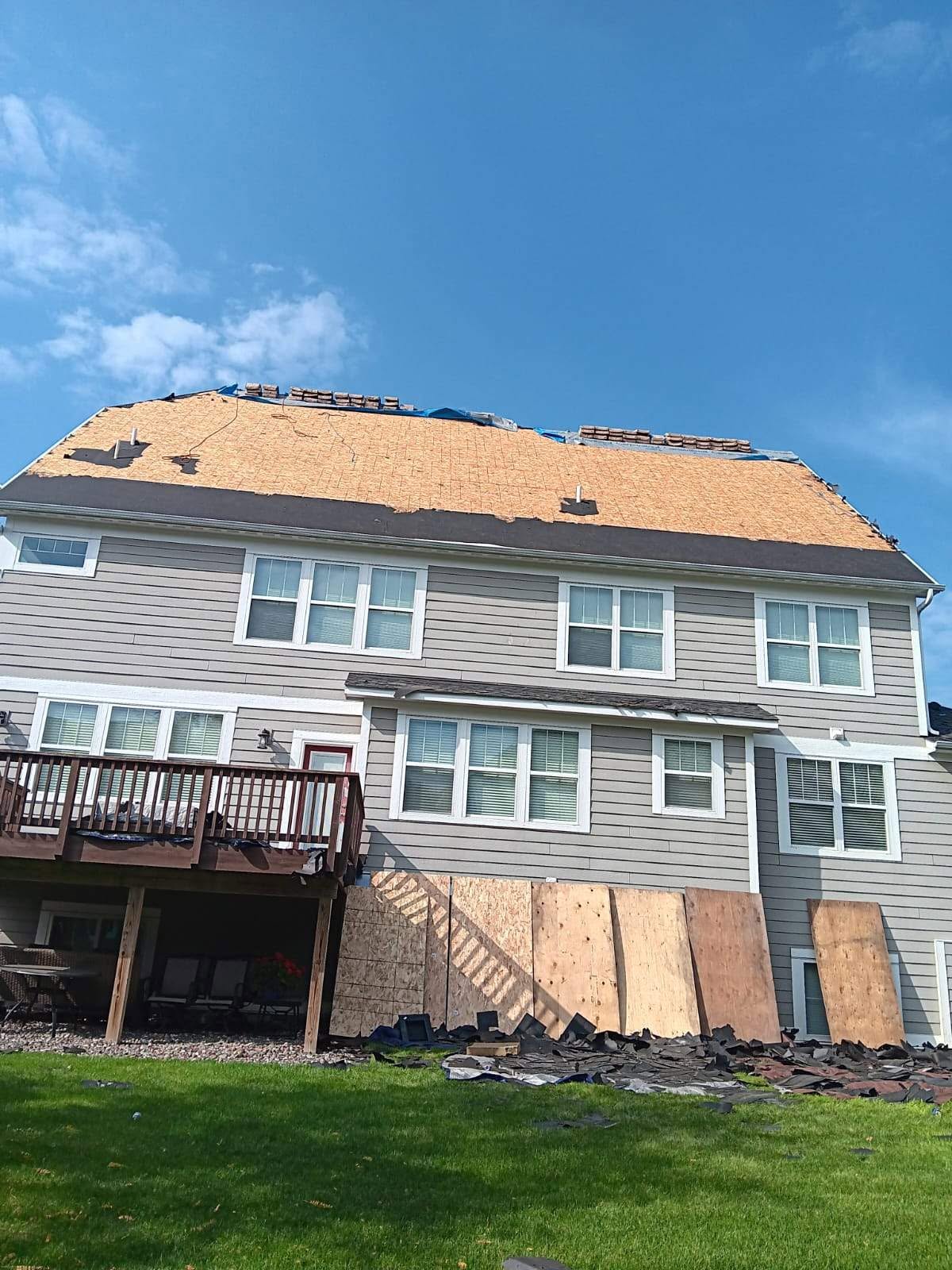
The Perfect Roofing Process
Customer-Obsessed Construction Starts Here
1. On-Roof Inspection Not a Driveway Assessment.
We get on the roof. Every inspection involves a physical evaluation of the shingles, flashings, pipe boots, ridge condition, and exposed decking edges. We check the attic for ventilation balance and signs of moisture damage. If you have been given a replacement recommendation from a contractor who evaluated your roof from the ground, you have not received a real inspection. You have received a sales visit.
2. A Scope Built Around What Your Roof Actually Needs.
After the inspection, we explain what we found and what it means. If the roof is repairable, we say so. If replacement is the right call, we show you why, walk you through every component of the scope, and explain what each line item is protecting against. The scope is custom to your specific roof, not a template adapted with your name at the top. This is the transparent sales process that defines how we operate.
3. Decking Inspection and Documentation Before Installation Begins.
Before any new material is installed, the full roof deck is inspected. Soft spots, delaminated sheathing, and improperly fastened decking are identified, photographed, and addressed. If decking replacement is needed, we communicate the scope and the cost before proceeding, not as a surprise addition at the end of the job. This is the step most shortcuts skip. It is also the step that determines whether the new roof performs as it should over time.
4. Full System Installation Every Layer, Every Transition.
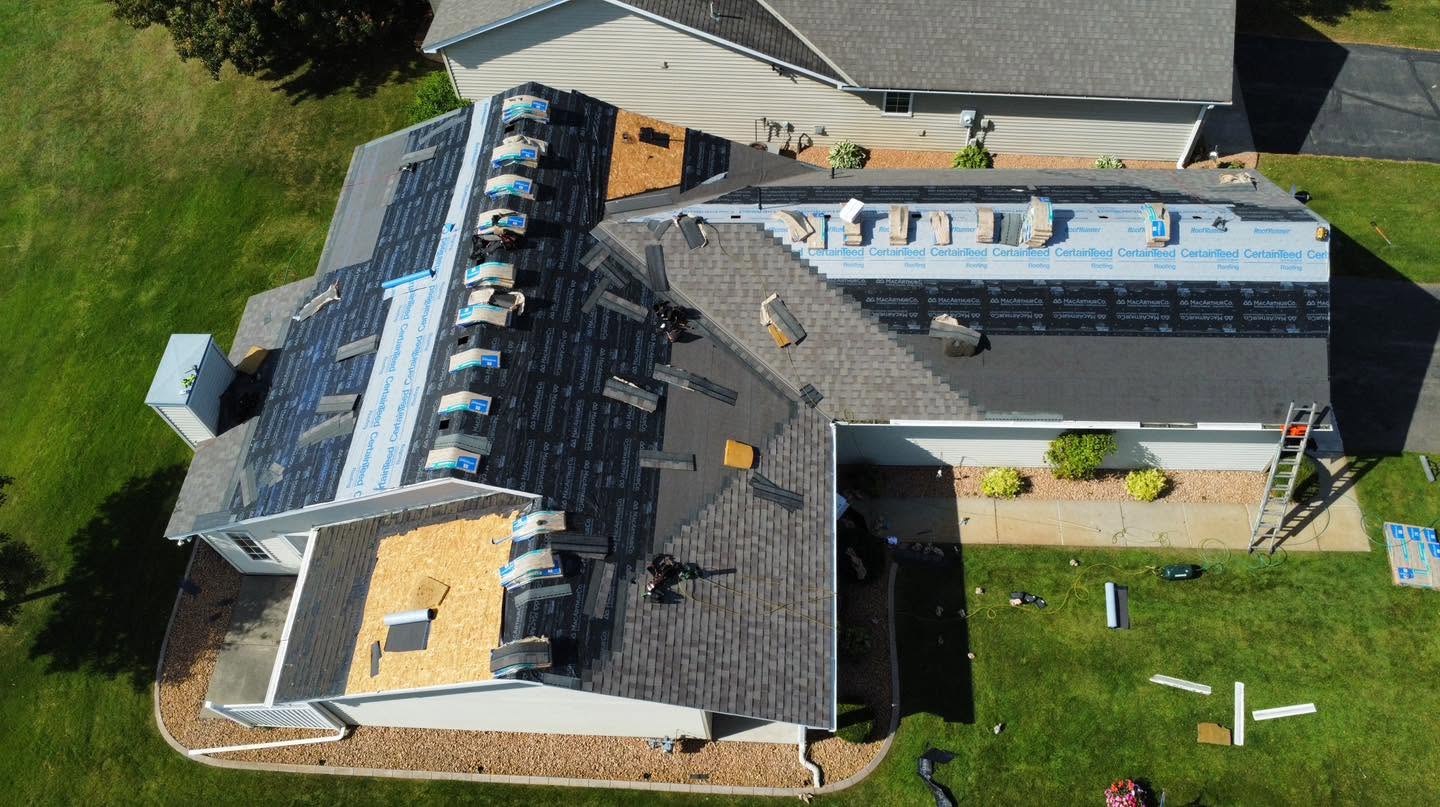
A complete replacement starts with the ice and water shield at every eave and valley, synthetic underlayment across the field, the specified shingle material properly fastened per manufacturer requirements, and new flashings at every penetration and transition. Ridge cap is installed with appropriate nailing pattern and alignment. Pipe boots are replaced, not reused. This is what a full system installation means. It is not the same as a shingle swap.
5. Ventilation Verification Before We Leave.
Before the crew leaves the job site, we verify that the intake and exhaust ventilation is functioning as designed. Blocked soffit vents from installation debris are a documented cause of post-installation ice dam problems. We check them. If a ventilation improvement is part of the scope, we confirm it is working. A roof that performs correctly through a Minnesota winter requires adequate airflow from day one.
6. Cleanup, Walkthrough, and a Contact Who Answers.
Magnetic rollers collect nails from the lawn and driveway. The job site is clean before we leave. You get a walkthrough of the completed work with the same person who scoped the job and managed the installation. If a question comes up after we leave, there is one person to call and that call gets answered. This is not a standard we aspire to. It is the standard our reviews describe.
Frequently Asked Questions
Common Questions Your Neighbors Are Asking
How do I know if I need a roof repair or a full replacement?
The honest answer depends on three things: the age of the roof, the extent of the damage, and the condition of the decking underneath. A roof under 15 years old with localized damage to a specific section is generally a good repair candidate, assuming the rest of the system is sound. A roof over 20 years old with granule loss across multiple sections, curling shingles, or multiple areas of failure is usually past the point where repair is a sound investment. The only way to know for certain is a professional inspection that gets on the roof and looks at the decking, the flashings, and the condition of the field shingles across the full surface. A contractor who recommends replacement without doing that inspection is not giving you an honest assessment.
What is the right time of year to replace a roof in Minnesota?
The practical installation window in Minnesota runs from May through October, with most crews at peak capacity from June through August after spring storm season generates a surge in demand. September is often an underrated scheduling month because contractor availability opens up after the summer peak and weather conditions remain reliable. Winter installations are possible in mild conditions but require cold-weather adhesives and carry more scheduling risk. If your roof is showing signs of end-of-life condition in the fall, a professional inspection can help you determine whether the system will hold through one more winter or whether acting before spring is the more sound decision.
What causes ice dams and is it a roofing problem or an insulation problem?
Ice dams are caused by uneven roof surface temperatures. Warm air escaping from the living space into the attic heats the upper portion of the roof deck, melting snow. That meltwater runs down toward the eaves, where the roof surface is cold because it overhangs the exterior wall, and refreezes. The accumulating ice ridge blocks additional drainage and forces water under the shingles. The root cause is almost always a combination of insufficient attic insulation and inadequate ventilation, not a roofing failure. Minnesota building code targets R-49 attic insulation and requires balanced soffit and ridge ventilation. A roofing contractor who replaces the roof without addressing the ventilation system is treating the symptom and leaving the cause. A properly built roof with correct ventilation does not guarantee ice-free winters, but it significantly reduces the conditions that allow dams to form.
How long does a roof replacement take?
Most standard residential roof replacements in the Chaska area are completed in one day by a professional crew. The single-day completion is worth understanding: when a roof is torn off in the morning, your home is exposed to weather until the installation is complete. A crew that finishes the job before leaving eliminates the risk of an unprotected roof overnight. The factors that extend a project beyond one day are roof size above a certain threshold, a steep pitch that requires additional safety rigging, and the discovery of decking damage that requires replacement before new material can be installed. A legitimate contractor will walk you through the expected timeline before the project starts and communicate any changes before they affect the schedule.
What should I ask a roofing contractor before hiring them?
Ask for their Minnesota contractor license number and verify it independently through the Minnesota Department of Labor and Industry before signing anything. Ask for a certificate of liability insurance and workers compensation coverage, and confirm the certificates are current. Ask the contractor to walk you through the scope line by line and explain what each component is: decking inspection, ice and water shield coverage, underlayment type, shingle product and manufacturer, flashing replacement, ventilation plan, and workmanship warranty terms. A contractor who deflects on any of these questions or provides a number without a detailed written scope is worth approaching carefully. The lowest bid in a set of three estimates almost always reflects a scope that omits one of those components.
Get Started In Just 30 Seconds
Call The Kangaroo Who Cares For You
Your home deserves a contractor who cares as much as you do. We recognize that any home improvement project is a major investment on your part, and we vow to exceed your expectations. Call the Kangaroo today to schedule your free inspection, or click below to get started!
Service Areas
Proudly Serving Our Chanhassen Community Since 1983

Creating Hoppy Homeowners In Chanhassen and Beyond Since 1983


Fully Licensed & Insured MN: #bC730116 WI: #3101-DCFR
Copyright 2026. Joey Roofing and Siding . All rights reserved.