Call (612) 703-3431 To Schedule Your Free Inspection Today

Gutter installation & Repair in Chanhassen MN
The Unsung Hero Protecting Your Foundation
What Gutter Installation Actually Involves
Water-Tight Solutions For You And Your Family
Seamless Gutter Installation: Custom-fabricated aluminum gutter runs produced on-site from coil stock to the exact length needed, eliminating the seam joints that are the primary source of leaks in sectional systems. The industry standard for new residential installations in the Twin Cities area.
Gutter Replacement: Full removal of existing gutters and downspouts and installation of a new system. Often done when existing gutters are pulling away from the fascia, leaking at seams, sagging due to improper pitch, or undersized for the roof's drainage area.
Downspout Installation and Routing: Correct downspout sizing and placement is as important as the gutter run itself. Undersized downspouts back up during high-volume rain events. Downspouts that terminate too close to the foundation direct water toward the home rather than away from it.
Gutter Guard Installation: Mesh or solid-cover gutter protection systems that reduce debris entry and extend the interval between cleanings. Effectiveness varies significantly by product type and roof debris volume.
— 18-Point Exterior Inspection
Lock In Your FREE Estimate When You Book Today
What Chaska Homeowners Should Understand About Gutter Systems
Why gutter sizing and pitch matter more than most homeowners realize, and when to replace
Gutter installation is the process of removing existing gutters and downspouts and installing a new drainage system that collects water at the roof edge and directs it away from the home's foundation, siding, and landscaping. When a gutter system works correctly, it is invisible. When it fails, the first sign is often water damage at the fascia behind the gutters, staining at the foundation line, or erosion of plantings at the drip line. In Chaska and the surrounding Carver County area, rainfall volume and the weight of snow and ice place specific demands on gutter systems that undersized or improperly installed gutters cannot meet.
Why Gutter System Design in Minnesota is More Specific Than It Appears
Roof catchment area determines the correct gutter and downspout size: A five-inch gutter can handle the drainage from a specific roof area based on the local design rainfall intensity. A six-inch gutter handles roughly 40 percent more volume. Homes with long roof runs that drain to a single gutter section, or homes with steep pitches that accelerate water velocity toward the gutter, require either larger gutter profiles or additional downspouts to handle the drainage load without overflow. A contractor who specifies the same five-inch gutter for every home without calculating the catchment area is guessing, not designing.
Gutter pitch controls where water drains, and where ice forms: Gutters require a slight downward pitch toward the downspout, typically one-quarter inch per ten feet of run. A gutter installed level or with a reverse pitch pools water at the low points. In Minnesota winters, that pooled water freezes, adds weight the hanger system was not designed to carry, and creates a dam that prevents any additional drainage. Over successive seasons, the ice loading pulls fasteners and causes the gutter to begin separating from the fascia. Correct pitch eliminates the pooling that starts this cycle.
Fascia condition determines how long a new gutter installation lasts: Gutters are fastened to the fascia board at the roof edge. Fascia boards are wood, and they are exposed to moisture from the back face through any gap between the gutter and the board, and from the front face if the gutter is overflowing. Fascia rot is common in homes where gutters have been overflowing or leaking at the rear edge for multiple seasons. Installing a new gutter on a rotted fascia produces a gutter that will pull away and fail on the same schedule as the previous one. Fascia replacement before gutter installation is not an upsell. It is the correct sequence.
Minnesota ice dam cycles stress gutter fasteners differently than rain alone: When ice dams form at the eave and ice accumulates in the gutter trough, the weight loading on the hanger system can exceed what the fascia attachment was designed to carry. Heavy hanger brackets spaced correctly for the gutter profile and the expected ice loading are an important specification in this climate. Hangers spaced at 24 inches may be adequate in a moderate climate. In Minnesota's winter loading environment, closer spacing provides meaningful additional resistance to pull-out.
When Gutter Replacement Makes Sense for Your Home
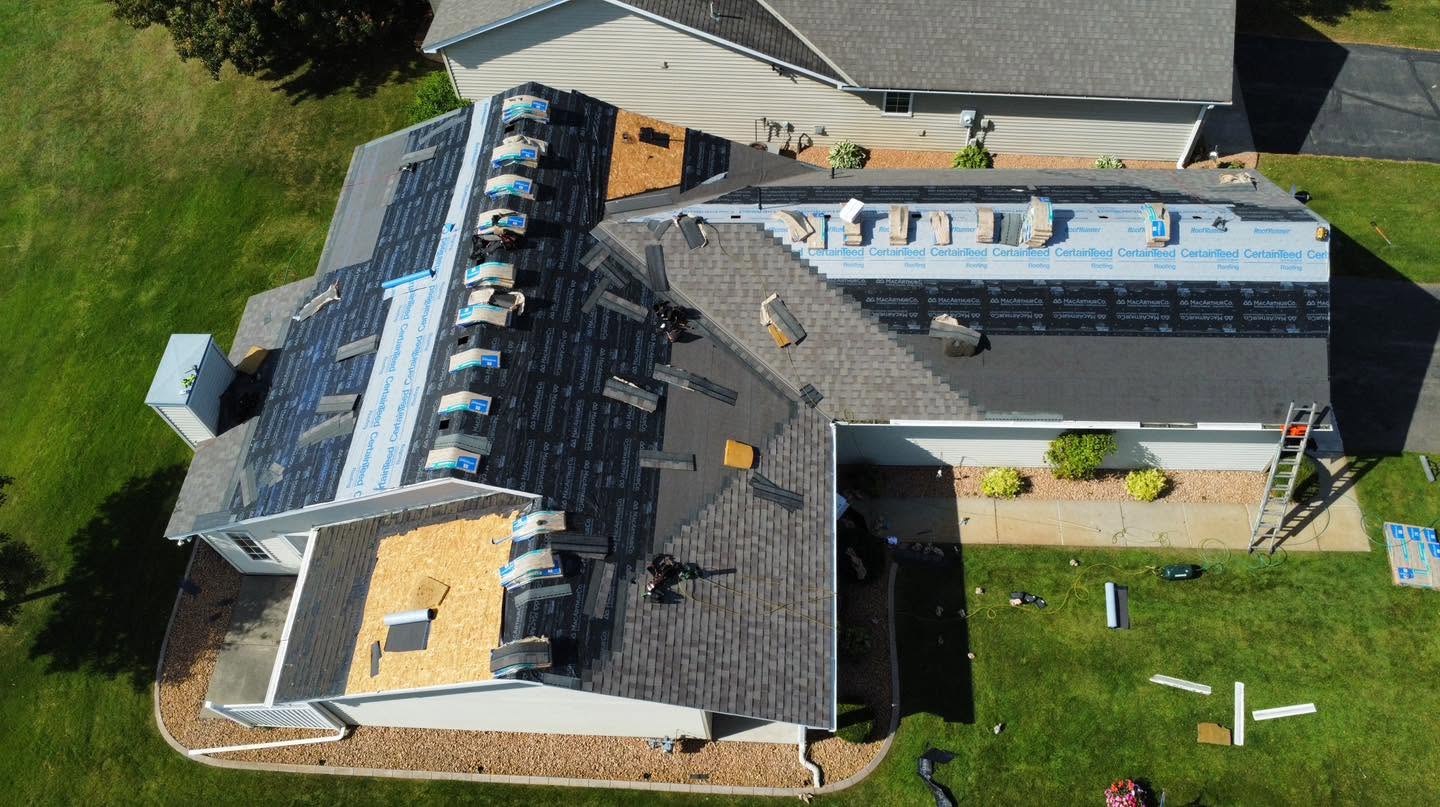
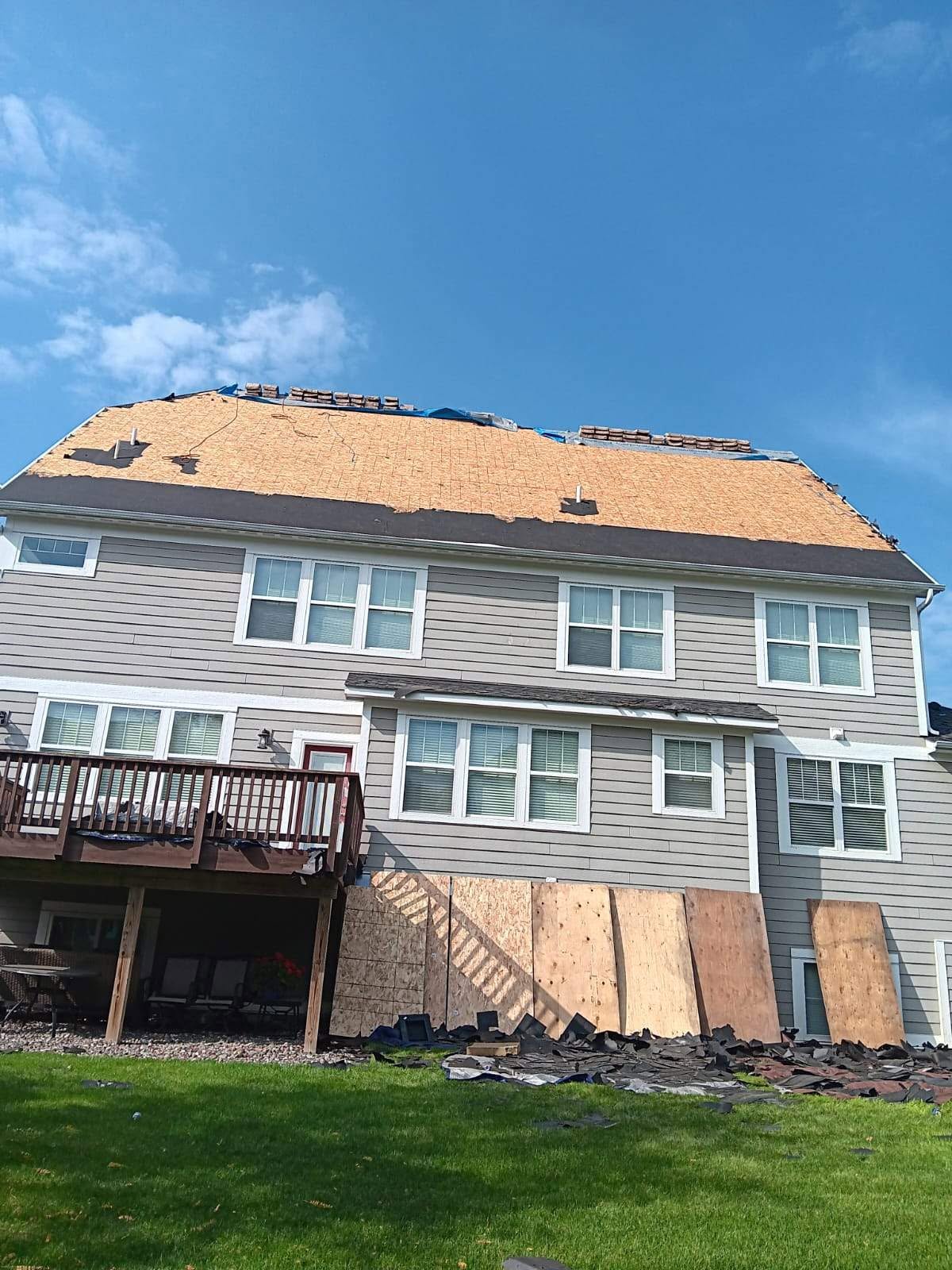
When a roof replacement is already planned: The most efficient time to replace gutters is during a roof replacement project. The existing gutters must come off during the tear-off sequence, drip edge must be installed correctly before gutters go back, and the new roofline geometry is already established. Replacing gutters at the same time avoids a separate mobilization and ensures the system is installed to the new roof's specifications from day one.
When existing gutters are pulling away from the fascia or sagging visibly: A gutter that is separating from the fascia is draining water behind the board rather than through the downspout. Every rain event after that point is adding water at the fascia and soffit line. Addressing this before the fascia reaches a point of structural compromise is less expensive than addressing it after.
When downspouts are terminating too close to the foundation: Downspouts that discharge at the foundation line direct roof drainage toward the building instead of away from it. In Chaska's clay-influenced soils, poor grading and short downspout extensions are a documented source of foundation moisture issues. Extension tubes and underground discharge lines are straightforward solutions that significantly reduce water pressure at the foundation.
After a storm event, particularly if hail caused visible denting: Hail events that damaged the roof often also dent aluminum gutters and downspouts. Dented downspouts restrict flow and can deform to a point where they separate at the seams. A post-storm gutter inspection is a reasonable part of any exterior damage assessment after a significant hail event.
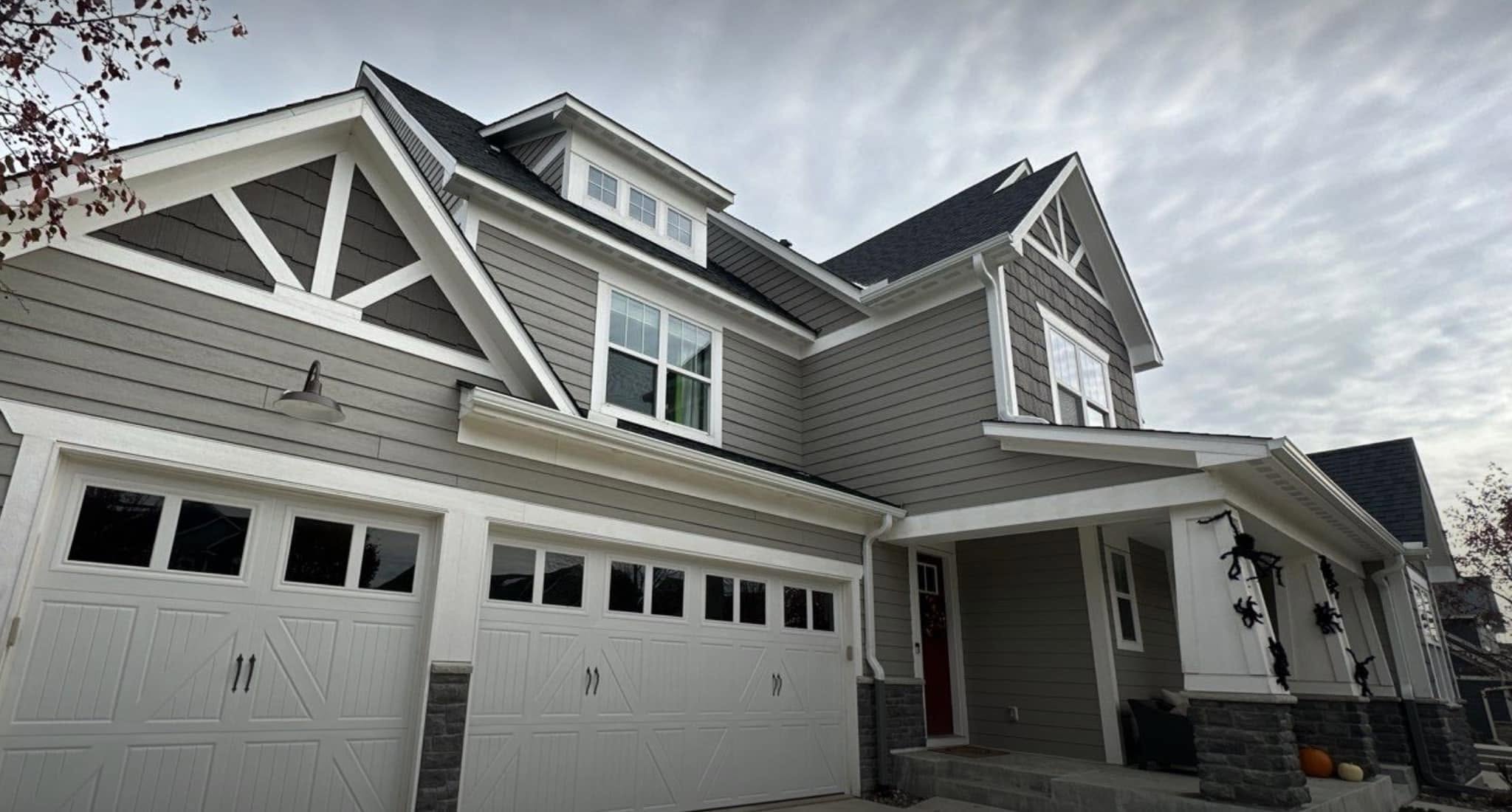
The Perfect Gutter Process
Customer-Obsessed Construction Starts Here
1. Drainage Assessment Before Specification.
We evaluate the roof catchment area that each gutter run drains, assess the condition of the existing fascia, and note the current downspout placement and termination points. The specification for gutter size, hanger spacing, and downspout count comes from this assessment, not from a default product package.
2. Fascia Inspection and Communication.
If fascia rot or damage is found, we document it and communicate the condition and cost before proceeding. Hanging new gutters on compromised fascia is not something we do. If the fascia is sound, we note that and move to installation. If it needs replacement, you receive a clear scope and cost before the project continues.
3. On-Site Fabrication of Seamless Runs.
Seamless aluminum gutter stock is cut to the exact run length on site. There are no factory seams within the run, only at the corners and downspout connections. Corners are mitered and sealed. Hangers are placed at correct intervals for Minnesota's ice loading environment, not at the minimum interval that keeps the product on the fascia in mild weather.
4. Downspout Placement and Termination.
Downspouts are placed at the lowest point of each gutter run, sized for the drainage volume of that run, and secured to the wall with correct fastening. Termination is evaluated relative to the grade at the foundation: extensions are added where the default discharge point directs water toward the building. Underground discharge is discussed as an option where grade or landscaping makes surface extension impractical.
5. Pitch Verification and Cleanup.
Before we leave, we verify pitch across each gutter run by confirming there are no low points where water will pool. Downspouts are checked to confirm clear passage. The job site is cleaned of gutter remnants, old fasteners, and installation debris. If this project was combined with a roof replacement, the magnetic nail sweep covers the driveway and lawn as part of the full-scope cleanup.
Frequently Asked Questions
Common Questions Your Neighbors Are Asking
How much does gutter installation cost in Chaska, MN?
Gutter installation costs in the Chaska area depend on the linear footage of gutters, the gutter profile size selected (five-inch or six-inch), the number of downspouts, whether fascia replacement is needed, and the accessibility of the roofline. Standard residential seamless aluminum gutter installation runs in the range of several hundred to several thousand dollars depending on home size and scope. Homes with multiple roof planes, complex rooflines, or significant fascia replacement needed will be at the higher end. Written estimates from a contractor who has walked the perimeter and measured the runs are the basis for accurate comparison.
What is the difference between seamless and sectional gutters?
Sectional gutters are sold in prefabricated lengths, typically ten feet, and connected at seams using connectors and sealant. Every seam is a potential leak point. Over time in Minnesota's freeze-thaw environment, the sealant at the seams cracks and the sections separate. Seamless gutters are fabricated on site from a continuous coil of aluminum stock, cut to the exact length of each run. The only seams in a seamless system are at the corners and where downspouts attach, reducing the number of potential failure points to the minimum. Seamless aluminum is the standard for new residential gutter installations in the Twin Cities area for this reason.
How long do gutters last in Minnesota?
Aluminum seamless gutters installed correctly typically last 20 to 30 years in Minnesota. The lifespan depends significantly on whether they were pitched correctly to prevent pooling and ice loading, whether the fascia they are attached to remained sound, and whether the system was cleared of debris regularly enough to prevent clogged downspouts that cause overflow. Gutters that are consistently overflowing, pooling water at low points, or pulling away from the fascia are failing before the material's design life. A properly installed system with correct pitch and sizing generally requires only periodic cleaning to reach its full service life.
Do I need gutter guards?
Gutter guards reduce the frequency of cleaning required by limiting the amount of debris that enters the gutter channel. Their effectiveness depends on the type of guard installed and the debris profile on your property. Micro-mesh guards are the most effective at excluding debris, including the helicopter seeds from Minnesota maples that pass through many open-face guard designs. Foam and brush guards are less expensive but accumulate debris within the guard material over time. No gutter guard eliminates the need for periodic inspection and cleaning. Whether guards are worth the investment depends on the tree cover near the home and how frequently the gutters currently require cleaning. A contractor who recommends guards for every home without assessing your specific debris situation is not giving you an honest assessment.
When should gutters be replaced vs repaired?
Isolated leaks at end caps or downspout connections can often be resealed. Gutters that are sagging along the run due to hanger failure can sometimes be refastened if the fascia is sound. Gutters that are pulling away from the fascia at multiple points, leaking at sectional seams throughout the run, heavily dented from hail, or undersized for the roof area they drain are better candidates for replacement than ongoing repair. The practical question is whether the existing system can be made to perform correctly with targeted repair, or whether the repair investment is being applied to a system that will continue to fail. A professional assessment of the full system gives you the information to answer that question accurately.
Get Started In Just 30 Seconds
Call The Kangaroo Who Cares For You
Your home deserves a contractor who cares as much as you do. We recognize that any home improvement project is a major investment on your part, and we vow to exceed your expectations. Call the Kangaroo today to schedule your free inspection, or click below to get started!
Service Areas
Proudly Serving Our Chanhassen Community Since 1983


Creating Hoppy Homeowners In Chanhassen and Beyond Since 1983


Fully Licensed & Insured MN: #bC730116 WI: #3101-DCFR
Copyright 2026. Joey Roofing and Siding . All rights reserved.