
How to Tell if Hail Damaged Your Roof: What We Check in Minnesota
By Joey Roofing and Siding · November 11, 2026
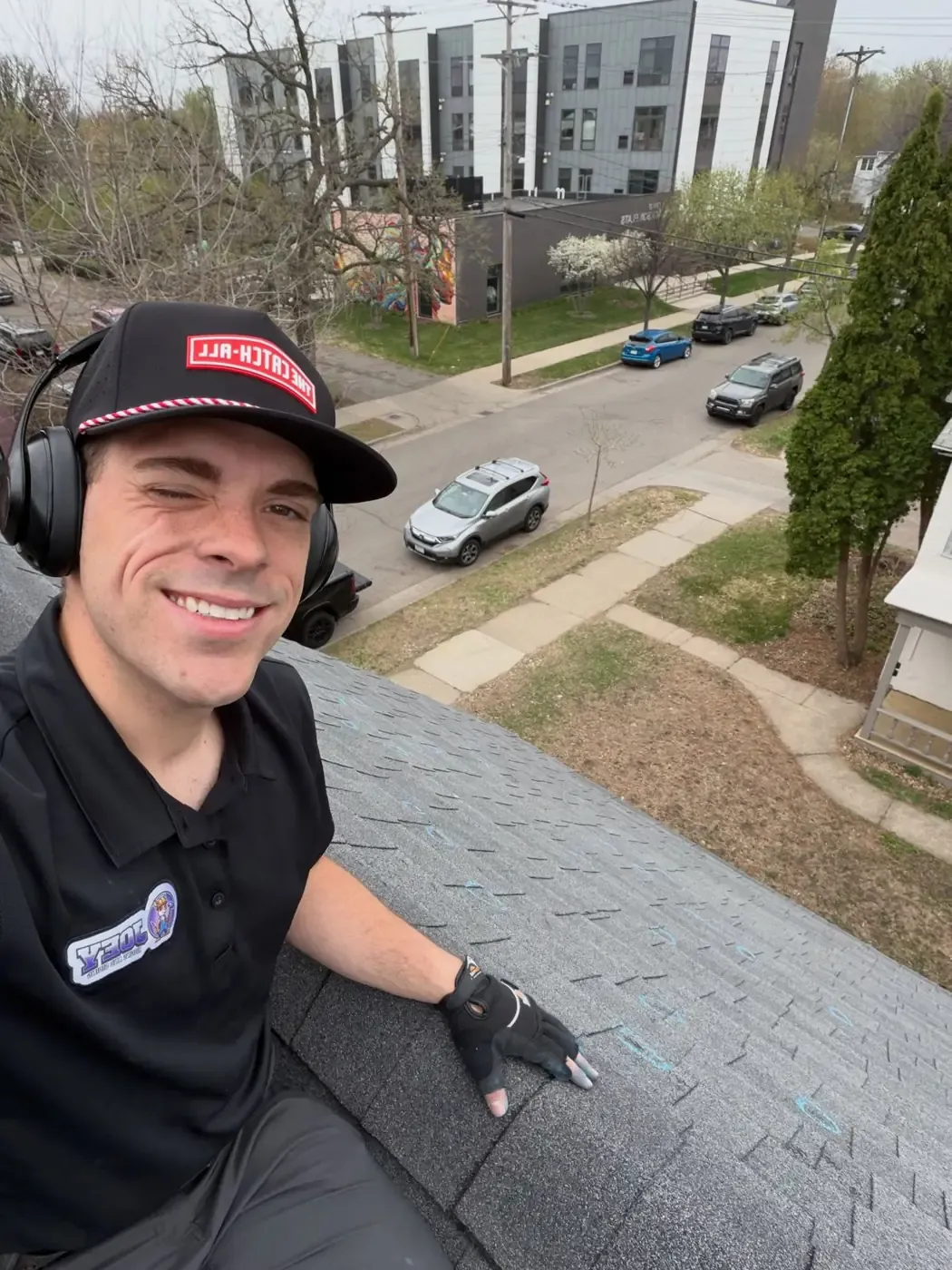
Most hail damage we find in November was put there in June. The storm came through, nothing dripped, the gutters looked fine from the driveway, and the homeowner moved on. Then the first hard freeze and thaw cycle of the winter works water into a bruised shingle, and a stain shows up on a bedroom ceiling in February.
If your neighborhood took hail this year and nobody has been on your roof since, the window before snow cover is the best time to find out what is actually up there. Here is what we look for, and what you can check yourself without a ladder.
How big does hail have to be?
The NOAA National Severe Storms Laboratory says hail quarter size or larger is considered severe, and it lists a quarter at 1 inch and a golf ball at 1 3/4 inches. That is a useful line for homeowners. Pea sized hail on a newer architectural shingle usually leaves nothing worth a claim. Quarters and up, especially with wind behind them, are when we start finding real damage.
Size is only half of it. A 25 year old roof that has already shed most of its granules will bruise from hail that a five year old roof shrugs off. Wind matters too, because it drives stones into one slope much harder than the others. We often find the west or north facing slopes beat up and the rest of the roof clean.
When Minnesotans start looking
Search interest tells the same story we see on the phone. People look up hail damage in spring and late summer, right after storms, and then mostly stop.
The drop in winter does not mean the damage went away. It means people stopped thinking about it. A roof with hail hits in its shingles goes into a Minnesota winter weaker than it looks.
What you can check from the ground
Hail hits soft metal before it hits anything else, and soft metal shows it clearly. Walk the house and look for:
- Round dents in gutters, downspouts and the metal caps on roof vents
- Dings or spatter marks on the air conditioner fins, mailbox or grill lid
- Granules piled at the bottom of downspouts, like coarse black sand
- Cracked or chipped siding and window wraps on one side of the house
- Shredded leaves and broken branches after the storm
- Neighbors on your street getting roofs or gutters replaced
None of these prove the shingles are damaged. They tell you the hail was big enough and hard enough that someone should get on the roof and look.
What we look for on the roof
On an asphalt shingle, a fresh hail hit looks like a dark spot where the granules got knocked off, often with a soft feel underneath when you press it with a thumb. That soft spot is a bruise. The mat inside the shingle is fractured even if the surface still looks intact. Over a few seasons, the exposed asphalt bakes in the sun, cracks, and lets water in.
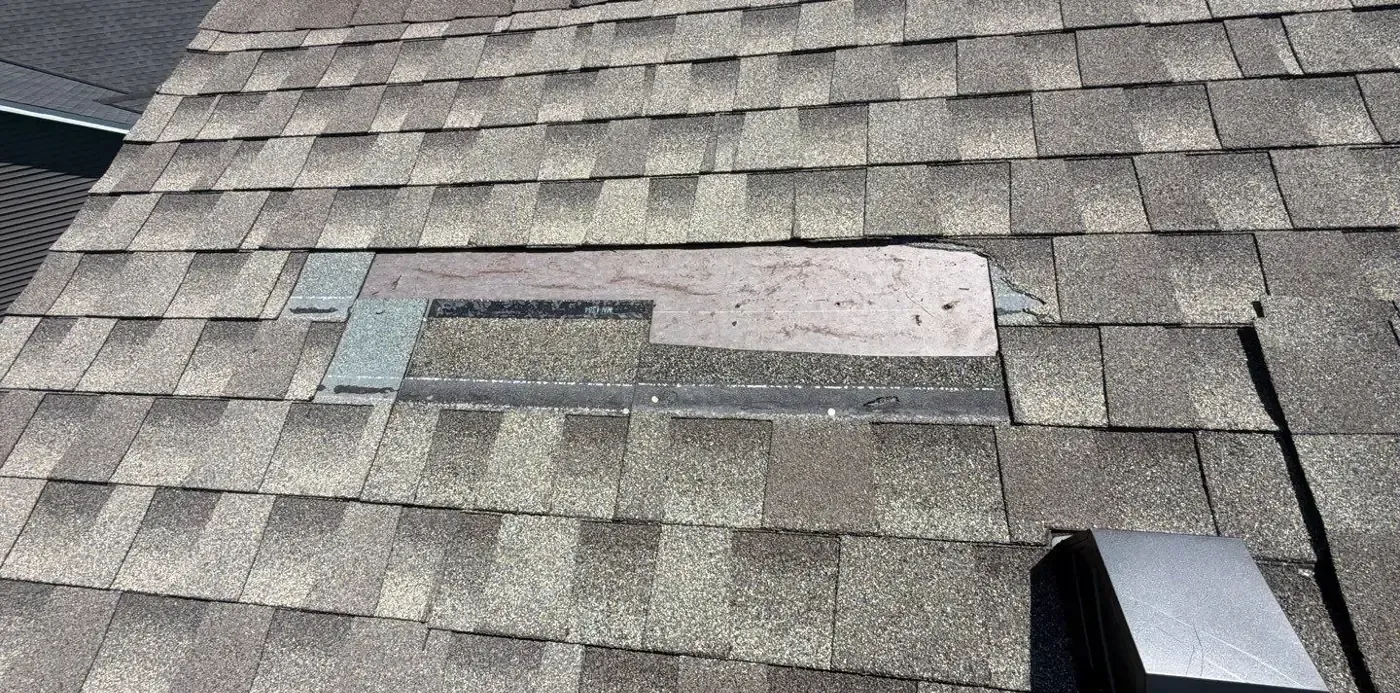
We mark hits inside a test square on each slope, photograph them, and check the ridge cap, which takes hail straight on. We also look at pipe boots, vent hoods and flashing, because a dented vent hood or a split boot can leak long before the shingles do. Then we go into the attic and look at the decking from below for stains or daylight.
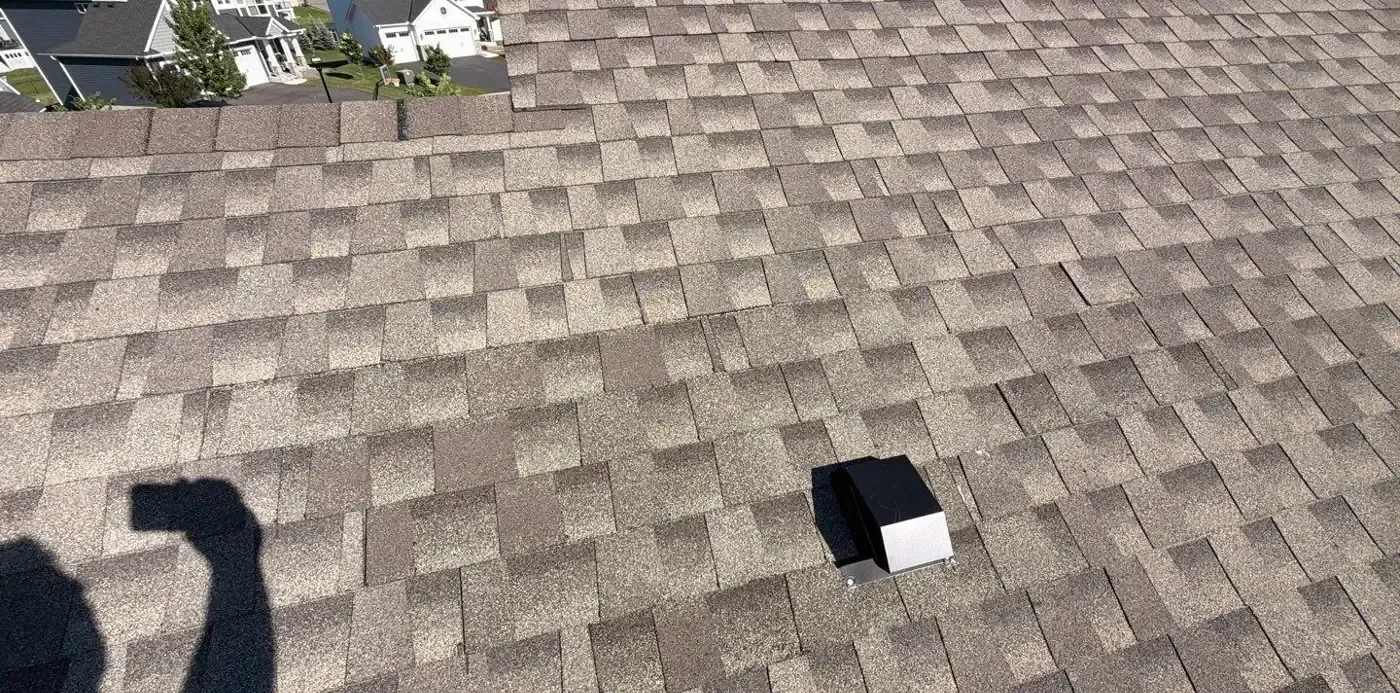
Some things look like hail and are not. Blistering from heat, normal granule loss on an old roof, foot traffic scuffs and nail pops all show up in storm reports from people in a hurry to sell a roof. A good inspector will tell you which is which.
"I’ve had Joey work with me on three different properties when I had concerns about possible hail and storm damage, and I couldn’t be happier with the experience. Joey was quick to respond, put my mind at ease, and did a full, detailed inspection of all three properties. He provided me with thorough reports that I could keep for my records and potentially use with insurance if a claim ever became necessary. What I appreciated most was that Joey was honest. He didn’t try to convince me that I had damage just to create a job for himself. ..."
JR S., 5-star Google review, August 2026
What to do if you think you were hit
Write down the date of the storm. Take your own photos of anything dented. Then get a storm damage assessment done on the roof, not from the driveway, so you know what you are dealing with before you call your insurance company. Our walkthrough of how a roof insurance claim works in Minnesota covers the claim side, and your policy sets the deadlines, so read that part of it before winter.
If the roof is clean, that is good news, and you should hear it plainly. Plenty of roofs in a hail zone come through fine. You still end up with dated photos of the roof's condition, which are worth having if a later storm does damage it.
Our free 18-point roof inspection covers all of this, including the attic, with photos and a written summary.
Frequently asked questions
What size hail damages a roof?
The National Severe Storms Laboratory considers hail 1 inch across, about the size of a quarter, to be severe. In our experience that is roughly where shingle damage starts showing up, and older roofs with worn granules can bruise from smaller hail.
Can hail damage a roof without causing a leak right away?
Yes. A hail bruise fractures the shingle mat under the surface. It often holds for months, then starts letting water in after freeze and thaw cycles or a season of sun breaks down the exposed asphalt.
How can I tell hail damage from normal wear?
Hail hits are random, usually heavier on the slopes facing the storm, and often feel soft when pressed. Normal wear is even across the roof. Dents in gutters and vent caps from the same storm are a strong sign the shingles took hits too.
Is it too late in the year to check for hail damage in Chanhassen?
No. Until snow covers the roof, a Chanhassen or west metro roof can be inspected and photographed. Check your policy for its claim deadline, since a storm from earlier this year may still fall inside it.
How much does a hail damage inspection cost?
Ours is free. Joey Roofing and Siding does a free 18-point on-roof inspection with photos, and you hear plainly whether there is damage worth a claim or not.

Written by Joey BrueOwner of Joey Roofing and Siding, the family roofing company in Chanhassen since 1983.